Preview complete
The prescreener preview is complete. You may now close the preview.
Take the Next Step with Sjögren's Disease Research
If you have been diagnosed with Sjögren's disease, you may qualify for a clinical research study evaluating an investigational medicine.
Today’s Research Unlocks
Tomorrow’s Future
Living with Sjögren's disease can mean dealing with symptoms that affect your everyday life. Dryness, fatigue, pain and other symptoms can vary from person to person and may make daily activities more challenging.
Clinical research helps doctors and researchers better understand Sjögren's disease and explore potential new treatment approaches.
This Phase 2a/b clinical study is evaluating an investigational medicine called DDY391 in adults with Sjögren's disease. Researchers will evaluate its efficacy, safety and tolerability, as well as different dose levels, to help determine whether DDY391 should continue to be studied in later-stage clinical trials.
You May Be Qualified If

You have been diagnosed with Sjögren's disease : The study requires participants to meet the 2016 ACR/EULAR classification criteria for Sjögren's disease.
You meet the study's health and treatment requirements : Additional requirements apply, including certain rules regarding previous treatments, current medications and other medical conditions.

You are 18 years of age or older : The study is open to adults 18–100 years of age. Healthy volunteers are not eligible.

*For full eligibility criteria of the clinical trial, please visit:

Sjögren's Disease Clinical Trial
This Phase 2a/b clinical study is evaluating DDY391, an investigational medicine, in adults with Sjögren's disease. Researchers are studying the medicine's potential effects on Sjögren's disease activity and symptoms, as well as its safety and tolerability. The study includes several treatment groups and different dose levels. Some participants will receive placebo during the study so researchers can compare outcomes between groups.

Is Participation Right for You?
Participating in a clinical trial is completely voluntary. Before joining, the study team will explain the study, what participation involves, potential risks and benefits, and any other information you need to make an informed decision. The study lasts considerably longer than the initial screening period. Participants may spend up to 8 weeks in screening, followed by 52 weeks of study treatment and a 4-week safety follow-up after the final dose.
Symptoms of Sjögren's Disease
Sjögren's disease is an autoimmune disease that can affect the body's moisture-producing glands and other organs. Symptoms can vary widely from person to person.
Dry Mouth and Dry Eyes
Reduced moisture production can cause persistent dryness of the mouth and eyes. Some people may experience difficulty swallowing dry foods, increased thirst, gritty or irritated eyes, or a need to use artificial tears.
Fatigue
Fatigue is a common symptom of Sjögren's disease and can affect energy levels and everyday activities.

Pain
Some people with Sjögren's disease experience joint, muscle or other types of pain.
Other Symptoms
Sjögren's disease can affect more than the eyes and mouth. Some people may experience additional symptoms involving joints, skin, lungs, kidneys, nerves or other parts of the body.
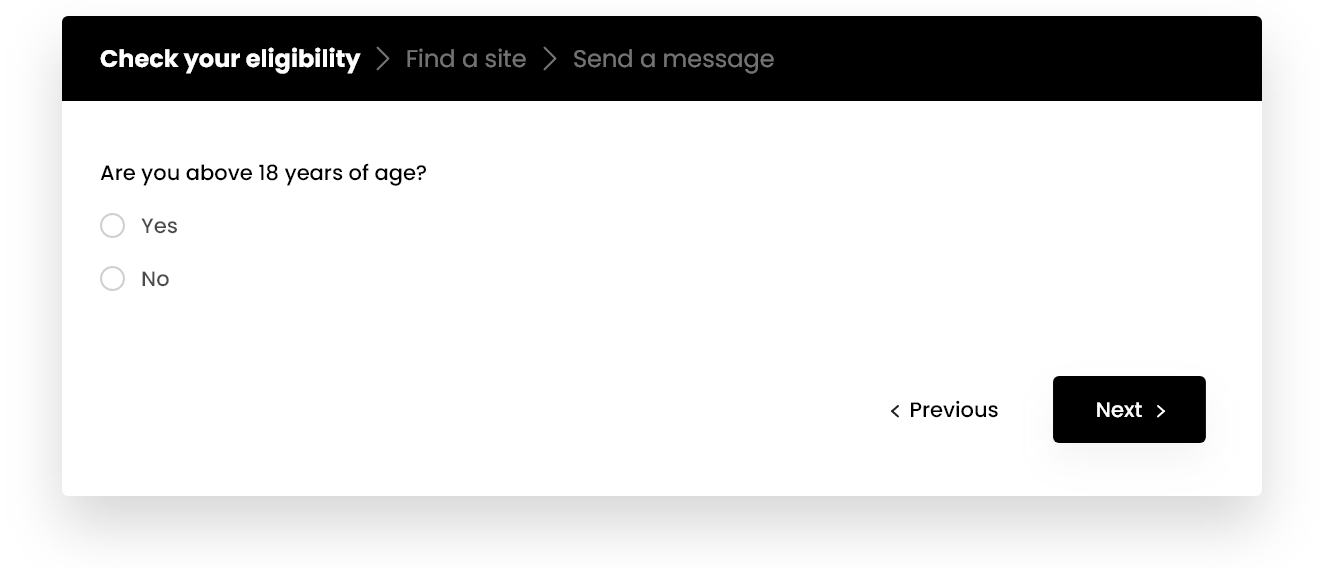
Answer a few questions about your diagnosis, health and treatment history to see whether you may meet some of the initial requirements for this clinical research study. It should take about 1–2 minutes.
Your answers do not guarantee eligibility. A study representative will review additional criteria with you if you appear to be a potential match.
The prescreener preview is complete. You may now close the preview.
Study Fast Facts
Random Assignment
Participants are assigned to study treatment groups by chance.

Some Participants Receive Placebo
Some participants will receive a placebo designed to resemble the study medicine but without the active investigational medicine.

The Study Medicine Is Investigational
DDY391 is being studied as an investigational treatment for Sjögren's disease. Its safety, tolerability and potential effects are being evaluated in this clinical study.
Study-Related Care
You will not be charged for study-related procedures and study treatment. The study team can explain what is and is not covered.
About the Sjögren's Disease Study
This Phase 2a/b study is designed to evaluate the efficacy, safety and tolerability of DDY391 in people with Sjögren's disease. The study is randomized and double-blind, meaning participants are assigned to treatment groups by chance and neither participants nor study investigators know which treatment is being received during the blinded portion of the study. The study includes three parts — Part A, Part B and Part C — and evaluates different doses and treatment approaches.
Researchers will assess changes in Sjögren's disease activity and symptoms, including patient-reported symptoms such as dryness, pain and fatigue. The study is expected to include approximately 344 participants.

What to Expect During the Study
Screening
You will first go through a screening period of up to 8 weeks. The study team will review your health history and perform assessments to determine whether you meet the study requirements.
Study Treatment
If eligible, you will enter the treatment portion of the study. The treatment period lasts up to 52 weeks. Participants are assigned to different treatment groups and dose levels, including DDY391 and placebo.
Study Assessments
During the study, the research team will monitor your health and assess your Sjögren's disease. Researchers will evaluate disease activity and patient-reported symptoms.
Safety Follow-Up
After the final dose of study treatment, you will have a 4-week safety follow-up period. The study team will continue to monitor your health and any potential side effects.
Frequently Asked Questions
01
What is Sjögren's disease?
Sjögren's disease is a chronic autoimmune disease in which the immune system attacks the body's own tissues. It commonly affects moisture-producing glands, leading to symptoms such as dry eyes and dry mouth, but it can also affect other parts of the body.
02
What is DDY391?
DDY391 is an investigational medicine being studied in this clinical trial. Researchers are evaluating its efficacy, safety and tolerability in adults with Sjögren's disease.
03
Is DDY391 approved to treat Sjögren's disease?
DDY391 is investigational in this study. The purpose of the clinical trial is to learn more about its potential effects and safety.
04
Will everyone receive DDY391?
No. Participants are assigned to different treatment groups. Some participants receive DDY391 and some receive placebo.
05
Will I know which treatment I receive?
The study is double-blind, meaning participants and investigators generally do not know which study treatment has been assigned during the blinded portion.
06
How long is the study?
The study includes up to 8 weeks of screening, a 52-week treatment period and a 4-week safety follow-up.
07
Who can participate?
Adults ages 18–100 with Sjögren's disease who meet the study's eligibility criteria may be able to participate. Healthy volunteers are not eligible.
08
Do I need to have positive SSA antibodies?
The key inclusion criteria specify a diagnosis according to the 2016 ACR/EULAR classification criteria. Participants with positive anti-Ro/SSA antibodies at screening may qualify. Participants who are anti-Ro/SSA negative may qualify if they have documented prior biopsy evidence of salivary-gland inflammation consistent with Sjögren's disease.
09
Can I participate if I take hydroxychloroquine?
Possibly. The protocol excludes participants taking more than 400 mg/day of hydroxychloroquine. Those taking 400 mg/day or less must have been on a stable dose for at least four weeks before randomization.
10
What other medications might prevent me from participating?
Certain immunosuppressive or biologic treatments may affect eligibility. For example, the study excludes some treatments within three months before randomization and certain cell-depleting therapies within the previous 12 months. The study team will review your medications with you.
11
Is participation voluntary?
Yes. You can choose whether to participate, and the study team will explain the study before you make a decision.
References
Novartis United States
Navigate Novartis
Media center
Our portfolio
Navigate Novartis


© 2026 Novartis
 Novartis Site Directory
This site is intended for US residents only
For global Novartis clinical trial information, please visit