


Kindly confirm your eligibility

See if you qualify

Prediction Model for the Risk of Developing Foot Ulcers in Diabetes

Foot ulcers in diabetes mellitus (DM) are a common and serious complication that can lead to infection, amputation, and increased mortality. Early identification of patients at high risk is crucial in order to implement preventive measures at an early stage. The number of people with DM is increasing globally, from 540 million in 2021 to an estimated 780 million by 2045. Foot ulcers cause considerable suffering for the individual and entail substantial costs for the healthcare system.

Participation Criteria

Inclusion Criteria:

  • Adult patients aged 18 years or older at the time of inclusion
  • Patients with a diagnosis of diabetes mellitus according to ICD-10 codes E10-E14, and/or
  • Patients who have been prescribed at least one diabetes-related medication after the age of 18
  • Patients with relevant diagnoses and/or prescriptions recorded in the study data sources between 1 January 2014 and 30 June 2025
Patient image

Disease / Condition

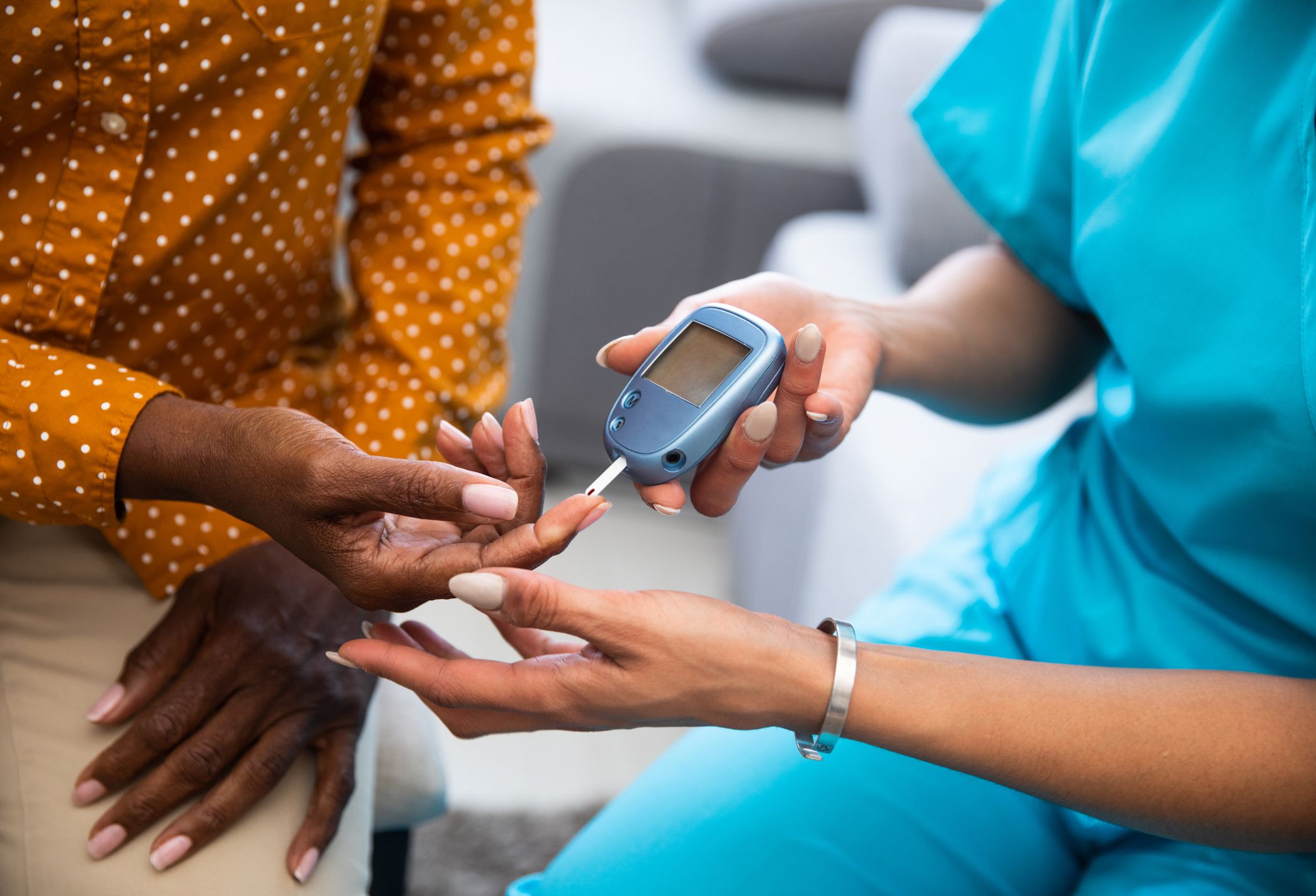
  • Patients with diabetes with foot ulcers
  • Patients with diabetes and foot ulcers registered in the electrical medical record system from primary care in Region Västragötaland.

Measures to be taken

In the initial evaluation phase, model performance will be assessed for the ability to discriminate between patients with and without existing diabetic foot ulcers. In a subsequent phase, the models' ability to prospectively predict the development of diabetic foot ulcers during follow-up will be evaluated.


Model robustness will be improved through an iterative process in which redundant variables are excluded and models are retrained. Predictive performance will be quantified using established metrics such as discrimination, calibration, and classification accuracy.


To account for uncertainty in individual predictions, the final models will be combined with Conformal Prediction meth

disease/condition image
Study image

What is study measuring?

The primary outcome is the predictive performance of machine learning-based models developed to estimate the risk of diabetic foot ulceration in patients with diabetes. Models will be trained using supervised machine learning techniques, with optimal hyperparameters identified through cross-validation.

Study icon
Study Aim

The aim of the study is to develop, test, and validate prediction models (statistical and AI-based) to identify patients with DM who are at risk of developing foot ulcers. The models will be based on retrospective electronic health record data from primary care in the Västra Götaland Region (VGR), as well as data from Statistics Sweden (SCB) concerning demographic factors such as marital status, level of education, occupation, and place of residence.


Learn more
Study icon
Study Methods

The study has two methodological approaches:

  • AI-based modelling
  • Statistical modelling.
Learn more

FAQ

How long is the study?
Time (months, number of visits, length of visits) . . .
What is the purpose of the study?
Study purpose . . .
Why should I join a clinical research study?
Thousands of people volunteer to participate in clinical trials every year. The reasons for participation vary, but all of them help to advance medicine. Some reasons include:
  • Medical supervision. Some people have a disease for which there is no approved treatment. They might join a clinical trial in the hopes of receiving an experimental medicine.
  • Contribute to future treatments. Many participants wish to help future patients. This has been reported by both patients and healthy volunteers.
  • Help improve the lives of others. Some people participate with the hope of helping others. The investigational drug or vaccine could benefit other patients and, in some cases, save lives.
What are the risk of study participation?
Risks . . . informed consent
What is a clinical research study?
Clinical research studies are used to show if/how a investigational drug works and to find out if it is safe. They can also be referred to as clinical research trials. Qualified healthcare professionals run clinical studies. The doctors and other healthcare providers are responsible for the study-related care of the people that participate (or enroll) in these studies. Clinical research studies are a mandatory part of the process that leads to health authority review and approval which is required before a drug can be marketed.
Independent committees (called Institutional Review Boards or IRBs) are made up of medical and nonmedical people who also watch over clinical research studies to make sure that the people who enroll are properly and adequately informed and consent to study participation.
What is a placebo?
An inactive substance or treatment that looks the same as, and is given in the same way as, an active drug or intervention/treatment being studied.