A large percentage of viewers are on mobile devices, so keep it short
and to the point. Have you ever noticed how long a 5 sentence
paragraph looks on a smart phone? If you read it via desktop/laptop,
you realize it is really not that much information. A suggestion is to
plan on “marrying” the two and keep the chatter down. Conversely,
don’t sacrifice the “meat and potatoes” of what you’re trying to
convey; this will help to keep the organic SEO strong.
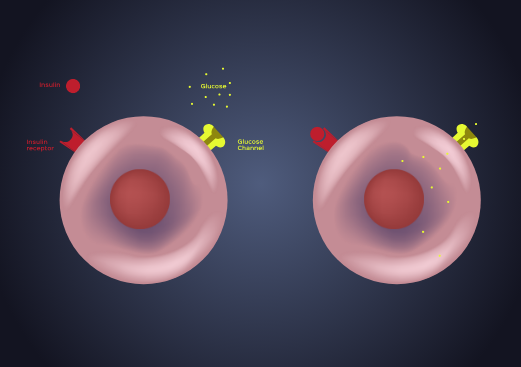
What causes Diabetes?
Viewers need to be given a direction every now and then. Use your
headers to draw the eye where you want it. Imagine the website as a
term paper and your outline will guide your structure. Focus broad
topics on the main headers and help guide the viewer down the right
path! Appropriately introducing call-to-action buttons also helps with
guiding the reader and connecting content writing with your website’s
goal.
How is Diabetes treated?
Here are a few website content writing tips to make sure your website
content gets the attention it deserves • Know your audience • Write
short, simple sentences – Nix the jargon – Mix up your word choice •
Make text scannable • Incorporate multimedia Capturing reader’s
interests with good website content and information can be
challenging. Most visitors will spend just a few seconds on a webpage,
before deciding what to do next. Therefore, good website writing is
the key to beating these odds.
More information about Diabetes
National Diabetes Foundation National Diabetes Foundation – Support
Network American Academy of Diabetes International Diabetes Council
International Federation of Diabetes Associations
Call
1800-9860-568
now to find out if you are eligible.
The Study
Who is eligibile?
It sounds simple, but so many writers put pen to paper—or finger to
keyboard—before thinking about who it is they’re trying to reach.
Before drafting content, ask yourself these questions: Who is my
primary audience? What about a secondary audience who can influence
and inform my primary audience? How will they find my site online? For
example, say you’re creating a website for a law firm. Your primary
audience might be existing clients. However, your secondary audience
is much broader and could include other attorneys, law reporters, or
anyone who might need your services in the future. You’ll need to make
sure your content is both accessible and interesting to all of these
audiences. What kind of questions might these groups ask about a
particular topic? Where are they most active online? What kind of
information do they need? Audiences find web content through many
different paths—social media sharing, links from other websites, email
sharing, and search engine results. That last method is especially
important when you write for the web. Text could be extremely
well-written and informative, but if it’s not optimized for search
engines, chances are few people will find it. Think of your audience
again: what search terms would they type into Google? Make sure to
include those terms in headlines and sub-headers.
What is the purpose of the study?
Web readers have short attention spans—they’ll decide whether your
site has the information they need in seconds. Structure your content
like an upside-down pyramid or cone. The most important messages go at
the top of the page. Then, gradually drill down to the more specific,
supporting information. End with tangential details. For example, say
you’re creating a webpage about a conference. The most pertinent
details—a description of the theme, date, and location—would appear at
the top of the page. Supporting details like speakers and their
lecture topics would follow. The less important information—such as
conference organizers, the history of the conference series or a list
of related resources—would appear at the bottom of the page.
What is the study medicine?
Long sentences are for Charles Dickens—the short attention span of
today’s reader demands sentences of 35 words or fewer. So website
content that’s accessible and easy to read will naturally reach a
wider audience. Focus on using nouns and verbs. Use adverbs and
adjectives sparingly. Don’t use words like “equanimity” or “obfuscate”
when words like “calm” or “confuse” will do. If you’re not sure what
grade level you write at (like most of us!) then it’s useful to check
how your texts score with an online readability tool. Most of the
popular models are based on the length of words and sentences in a
text. Your text’s readability is then scored by a number or an
education level. These three tools will scan your text and score its
readability: • The Readability Test Tool • The Readability Calculator
• Microsoft Word Can your text be easily understood at a 7th to
9th-grade reading level? Check how it scores on the Flesch-Kincaid
Grade Level to find out.
About Clinical Trials
What is a clinical trial?
If you are eligible and decide to join the clinical research study,
you will take part for up to 22 weeks. You can expect to visit the
study site about 10 times, with one follow-up telephone call. If you
are eligible and decide to join the clinical research study, you will
take part for up to 22 weeks. You can expect to visit the study site
about 10 times, with one follow-up telephone call.
What are the phases of a clinical trial?
If you are eligible and decide to join the clinical research study,
you will take part for up to 22 weeks. You can expect to visit the
study site about 10 times, with one follow-up telephone call. If you
are eligible and decide to join the clinical research study, you will
take part for up to 22 weeks. You can expect to visit the study site
about 10 times, with one follow-up telephone call.
Why should I join a clinical research study?
If you are eligible and decide to join the clinical research study,
you will take part for up to 22 weeks. You can expect to visit the
study site about 10 times, with one follow-up telephone call. If you
are eligible and decide to join the clinical research study, you will
take part for up to 22 weeks. You can expect to visit the study site
about 10 times, with one follow-up telephone call.
What questions should I ask if I am thinking about a clinical research study?
If you are eligible and decide to join the clinical research study,
you will take part for up to 22 weeks. You can expect to visit the
study site about 10 times, with one follow-up telephone call. If you
are eligible and decide to join the clinical research study, you will
take part for up to 22 weeks. You can expect to visit the study site
about 10 times, with one follow-up telephone call.
What to expect if you participate?
Speak To Your Demographic – So how does one speak to such a broad
audience without junking up their website? One most effective method is
creating different portals or paths for each demographic to follow.
Start with the home page; use specific “call outs” to direct the viewer
to his/her preferred section of the site. Then cater the content to
appeal to that specific cross section. Are you speaking to both groups
and individuals? Have a call to action about groups so that the viewer
can find and read pertinent information without having to click around
and get annoyed with the ‘This doesn’t apply to me’ syndrome. Make them
comfortable and confident that you know what you’re doing on all fronts!
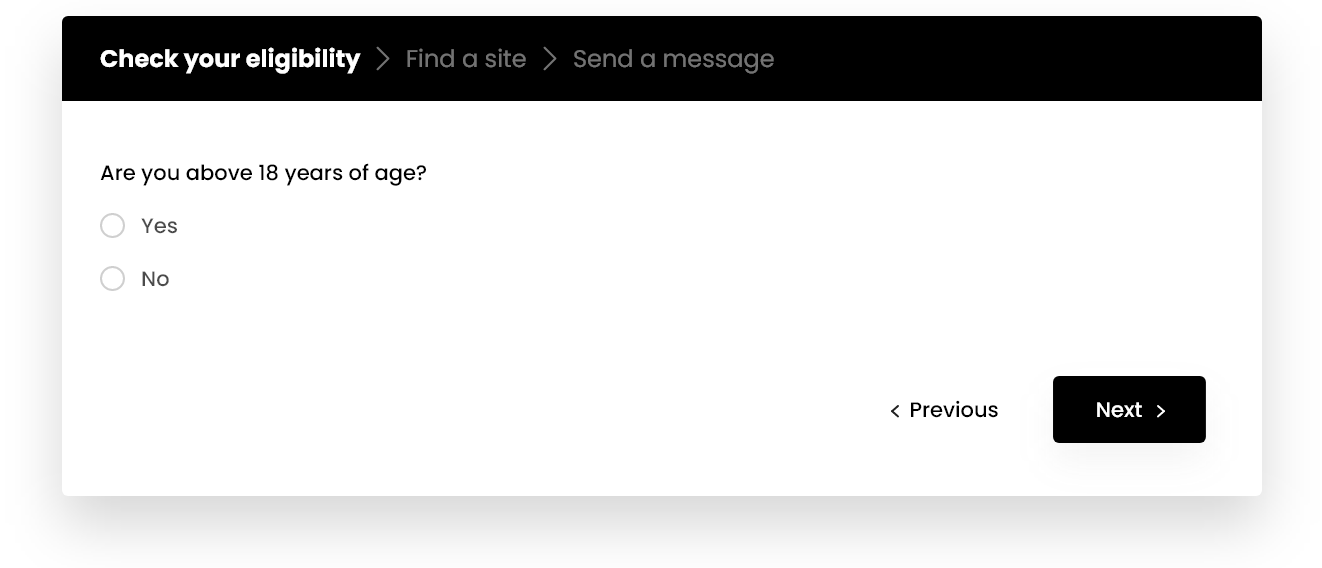
Check your eligibility
Take up this questionnaire to help us determine if you have symptoms
that are common to this clinical study. If you have the common
symptoms, you may be eligible to take part in the study.
Preview complete
The prescreener preview is complete. You may now close the preview.
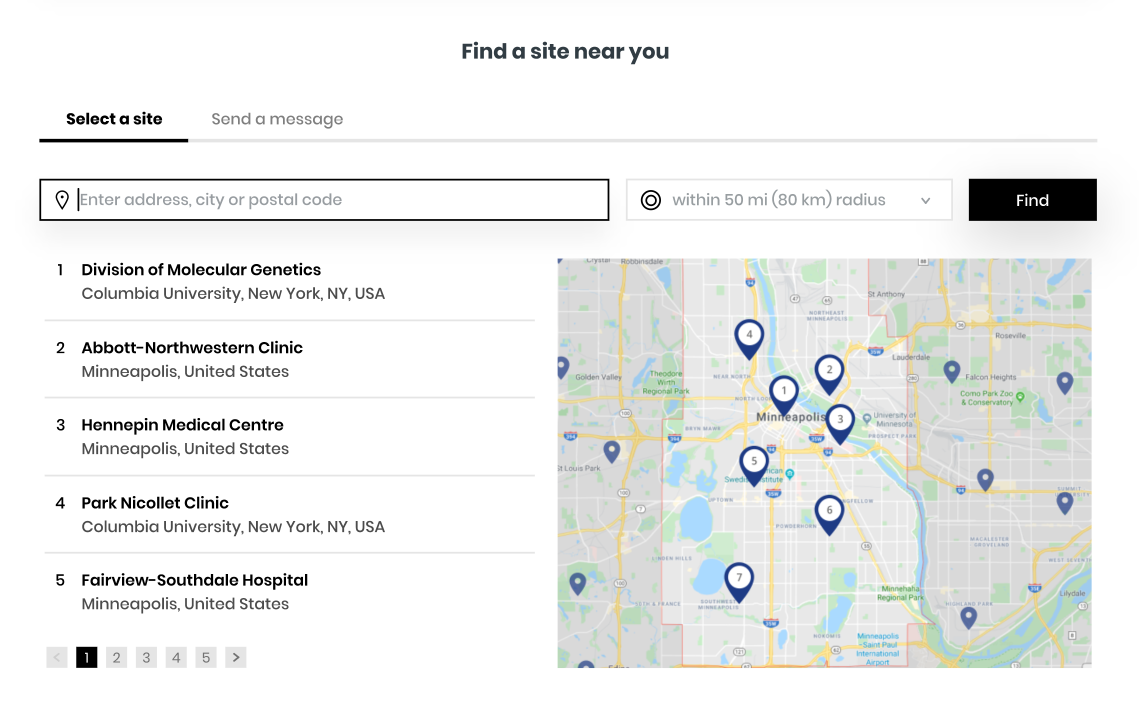
Get in touch
Contact the Diabetes Clinical Research Study screening center to find
out if you may be eligible to participate.